

Applied AI
Chatbot or AI agent on WhatsApp: the difference and which to choose
A scripted chatbot follows a menu; an AI agent understands what the customer writes and gets it done. See how each one works, the pros and cons, and which fits your business.
By Bruno Porto6 min read
What is the difference between a chatbot and an AI agent?
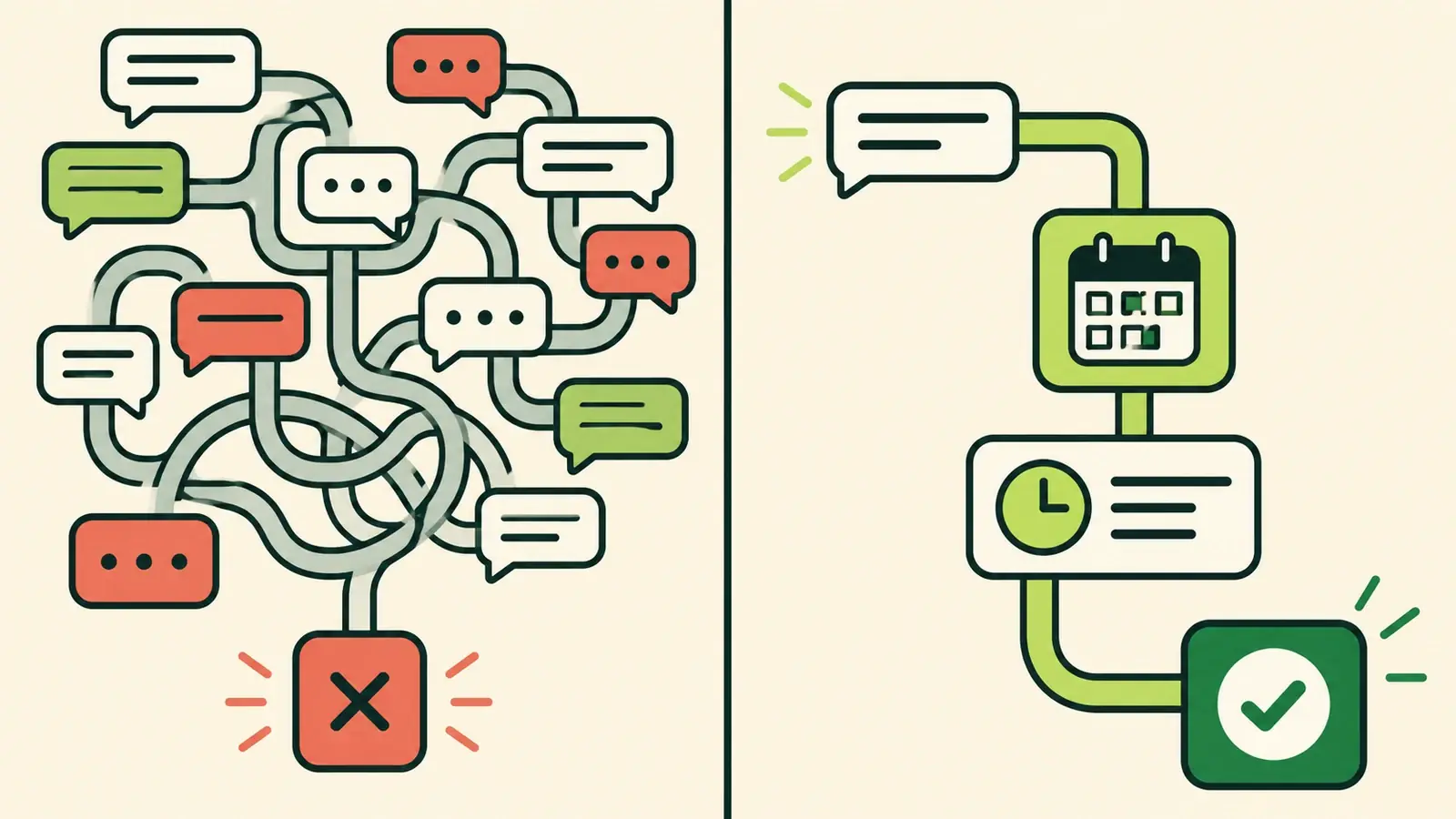
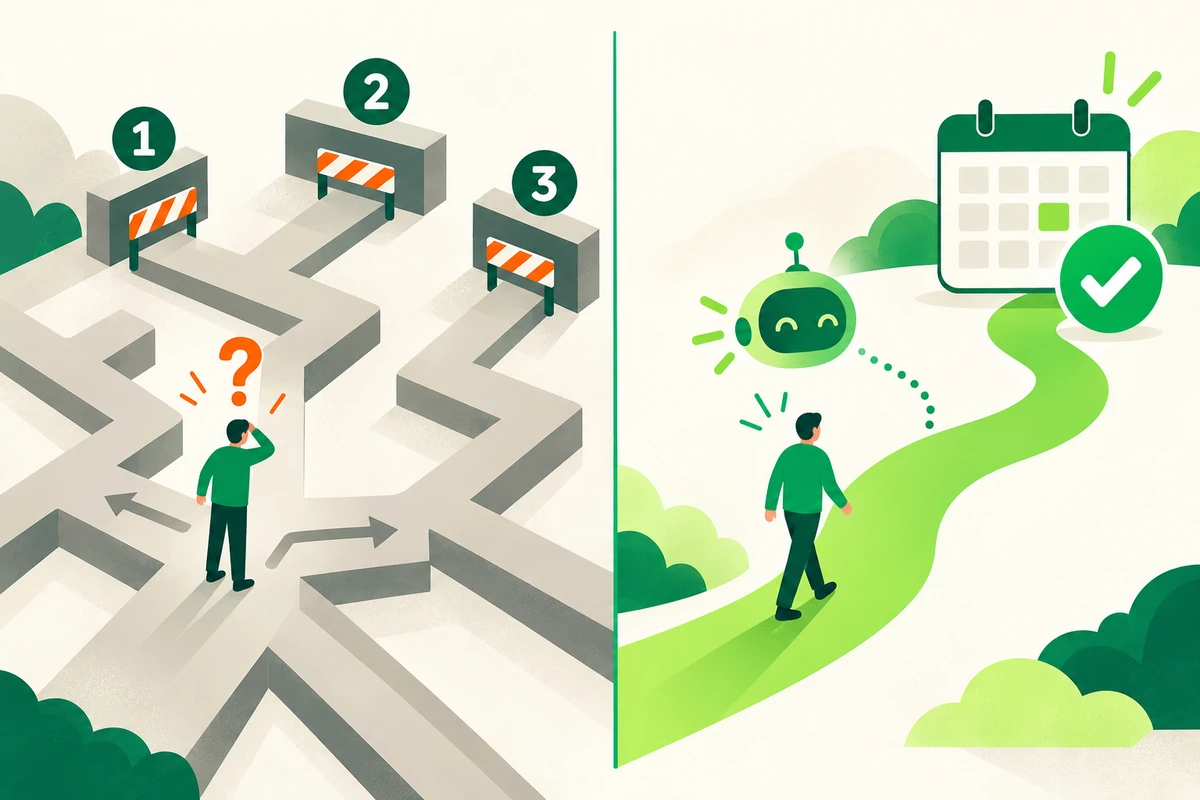
A scripted chatbot follows a path designed in advance: it shows options and replies with canned text. An AI agent understands what the customer wrote, decides what to do and carries out the task, such as checking the calendar and booking an appointment.
| Scripted chatbot | AI agent | |
|---|---|---|
| How the customer talks | Picks options from a menu | Types or sends voice notes in their own words |
| Off-script question | Goes back to the menu or does not understand | Answers from the business’s material |
| Replies | Canned text, the same for everyone | Written on the spot, in the brand’s tone |
| Booking | Collects details and someone books later | Checks free slots and books in the chat |
| When it does not know | Repeats the options | Hands the conversation to a person |
| Maintenance | Redesign the flow with every change | Update the material and instructions |
How does a scripted chatbot work?
Someone designs a tree of options: each number leads to an answer or to another menu. The customer only moves forward by choosing one of the options provided.
- Customer
Hi, do you have a haircut slot tomorrow afternoon?
- Chatbot
Hello! Choose an option: 1 - Services and prices, 2 - Book, 3 - Address, 4 - Talk to a person.
- Customer
2
- Chatbot
Please enter your full name and the service you want. A team member will confirm the time.
Strengths
- Predictable: always replies with the same text.
- Good for one very common question, such as your address or opening hours.
- Easy to understand for whoever built the flow.
Limits
- Does not understand when customers write in their own words or send voice notes.
- When booking, it usually just collects details: someone still has to book.
- Every new service, price or rule means editing the flow.
How does an AI agent work?
The agent uses a language model to understand the message and a set of tools to act: read the business’s material, check the calendar, create a payment link, move the lead through the funnel. It steers the conversation until the request is solved.
- Customer
Hi, do you have a haircut slot tomorrow afternoon?
- AI agent
Hi! Tomorrow afternoon I have 2 pm, 3:30 pm and 5 pm. Which do you prefer?
- Customer
3:30. Can you do my beard as well?
- AI agent
Sure! A haircut and beard trim fit in that slot. You’re booked for tomorrow at 3:30 pm. What name should I put on the booking?
Strengths
- Understands free text and voice notes, no menu.
- Gets the task done in the chat: books, reschedules, cancels, charges.
- Follows up with people who stopped replying.
- Changes its rules when you update the material, without redesigning flows.
Things to watch
- It answers only as well as the material it was given: missing information becomes a conversation handed to the team.
- It needs clear limits (what never to answer, when to call a person).
- It is worth reviewing conversations in the first weeks.
Which one should my business choose?
If your WhatsApp mostly gets one repeated question, a simple menu does the job. If customers ask questions, negotiate times and need a reminder later, an AI agent does the work that a menu leaves to your team.
A scripted chatbot is enough when
- Messages are almost always the same question.
- There is no calendar or payment involved in the conversation.
- Someone on the team quickly answers anything outside the menu.
An AI agent makes more sense when
- Your business runs on appointments: clinic, salon, barbershop, psychologist, consultant.
- Lots of messages arrive after hours or while the team is busy with customers.
- Customers send voice notes and write in their own words.
- Leads disappear halfway through the conversation and nobody follows up.
A menu organizes the conversation. An agent resolves it.
What should I ask before signing up?
This applies to any tool, chatbot or agent. These questions show whether it really handles customer service or just organizes the queue.
Ask the provider
- Does it work on the WhatsApp number I already use?
- Does it understand and reply to voice notes?
- Does it book straight into my calendar or only collect details?
- What happens when it does not know the answer?
- Can I take over the conversation at any time, with the history?
- Are my conversations and materials used to train public models?
Frequently asked questions
- Is an AI agent the same as ChatGPT on WhatsApp?
- Not quite. A language model only chats. An agent uses that kind of model, but also follows the business’s rules, looks up its material and carries out tasks, such as booking in the calendar.
- Can an AI agent make up an answer?
- That is the risk that needs the most care. That is why the agent should answer from the business’s material and hand over to a person when it cannot find the answer. That is how Caji Agent works.
- Can I use a chatbot and an agent together?
- You can, but usually there is no need: the agent already answers the simple questions a menu would, without making the customer pick numbers.
- Do I need to know how to code to use an AI agent?
- Not with Caji. You build the agent by talking to Lia, the dashboard assistant, and teach it with your website, a PDF or text.
Go beyond the script on your WhatsApp
Try the Pro plan free for 7 days, no credit card, and watch the agent answer, book and follow up.
Try it free for 7 days

Keep reading

Guide
How to book appointments on WhatsApp with AI: a guide for clinics
What an AI agent does when booking, how to prepare your clinic before switching it on and which numbers to watch in the first weeks.
8 min read
Trending
Is WhatsApp Business becoming paid? What really changed in October 2026
The message that went around small businesses mixes up two different things. See what changed, for whom, what is still free and what to check in your case.
4 min read